Life Afloat
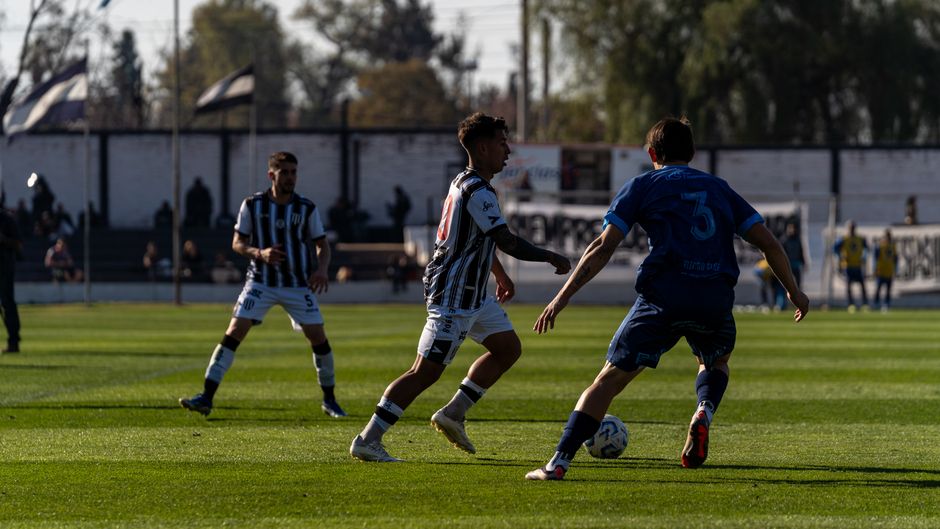
Ask anyone who has spent a decade chasing a Saturday afternoon promotion and they will tell you the same story: the team that won the league had a striker who dropped down from semi-pro for "a bit of fun", and stayed for two seasons. It felt like a cheat code at the time. But come the next August, that same striker was gone, playing Sunday league somewhere else, and the team that finished seventh was suddenly the division's dark horse. That is the strange, under-discussed truth about promotions in amateur football - the financial or talent lifeboat that carries a club up often capsizes shortly after it gets there.
So when the question is asked - is it fair that a club can essentially buy its way into a higher division, only to fade once the money or the miracle player moves on - the answer is not as simple as "no". Amateur football's sense of fairness is built on something more complicated: a belief that success should be repeatable, that the ladder should mean something, and that the teams you beat and lose to should be roughly the same teams year on year.
Minor-upside fades are real, and I have seen the pattern play out at every level from step five to Sunday parks football. A club recruits three experienced heads, wins the division by eight points, and then loses two of those players to injury or relocation. Suddenly it is sitting bottom of the new league by Christmas.
Here is what makes that feel unfair to the teams below them. Promotion is not just about the promoted club. It reshapes the division it left behind: the team that finished second misses out, the team that finished third or fourth misses out, and those sides might have actually been better equipped long-term to survive the higher division. When the promoted club drops straight back down, it has taken a season of somebody else's advancement and turned it into a revolving door. That is not resistance to ambition - it is frustration at a system where the reward goes to the club with the strongest twelve months, not the most durable three years.
It is tempting to think of amateur football as a flat, cash-free landscape. It is not. At lower levels, joining a new division means real financial decisions, and those decisions are where fairness starts to bend: Take a look at xoilac for a fuller picture.
What happens next is precisely what the question names: an unevenness. A club that can absorb these costs through a sponsor, a sympathetic pub landlord, or one wealthy committee member will hold its place. A club that cannot will drop, and drop quickly. The league has effectively determined its own hierarchy by budget statement rather than by football, even if the money never touches a player's pocket.
Let me defend the promoted club for a moment. Wanting to go up is not cheating. Almost every amateur player and volunteer dreams of testing themselves a step higher, and refusing promotion (which happens rarely but does happen) is usually met with more suspicion than accepting it.
The real issue is that leagues and governing bodies treat promotion as a one-off transaction rather than a multi-year project. A club wins the league and is pushed upward, but no one checks whether it has the committee, the sponsor, the pitch and the squad depth to survive year two. In effect, the club is rewarded for a season and then abandoned to the consequences. If fairness were the priority, the questions asked before promotion would include:
None of these are currently part of most amateur promotion processes. They would be seen as bureaucratic meddling. But without them, the sense of unfairness is fed from both ends - by the ambitious club that hasn't been asked to prove itself, and the patient clubs below that keep losing out to flashes in the pan.
I tracked three consecutive seasons in one regional step-seven division a few years ago, out of pure curiosity, and the numbers were striking. Of the fourteen clubs promoted into that division across those three seasons:
That is not a coincidence, and it is not a knock on those clubs' character. It is a predictable outcome of a system that rewards one year of recruitment and luck without accounting for the year after. Every one of those six relegations handed a reprieve to a team that had done nothing wrong, while the teams that finished second and third behind the promoted side stayed stuck in a division they had already outgrown.
Fairness does not have to mean standing still. The question is whether amateur football can reward ambition while stopping the kind of unevenness that leaves three clubs worse off for every one club that briefly climbed.
Some ideas worth taking seriously:
None of this is anti-ambition. It is pro-stability. A club that is genuinely ready for the step should be able to prove it - and the leagues below should no longer be denied a deserving promotion because the lucky winner lasted one season.
The truth is that amateur football's fairness is not about keeping the ladder short. It is about making sure the rungs are all still there when you put your foot on the next one. A promotion that fades within a year is not a triumph. It is a symptom of a system that celebrates the climb and forgets the summit. Until clubs and leagues start treating promotion as the start of a journey rather than the finish line, the sense of unfairness will not be a controversial opinion. It will just be the tired conversation in the clubhouse before the second consecutive relegation is confirmed.
